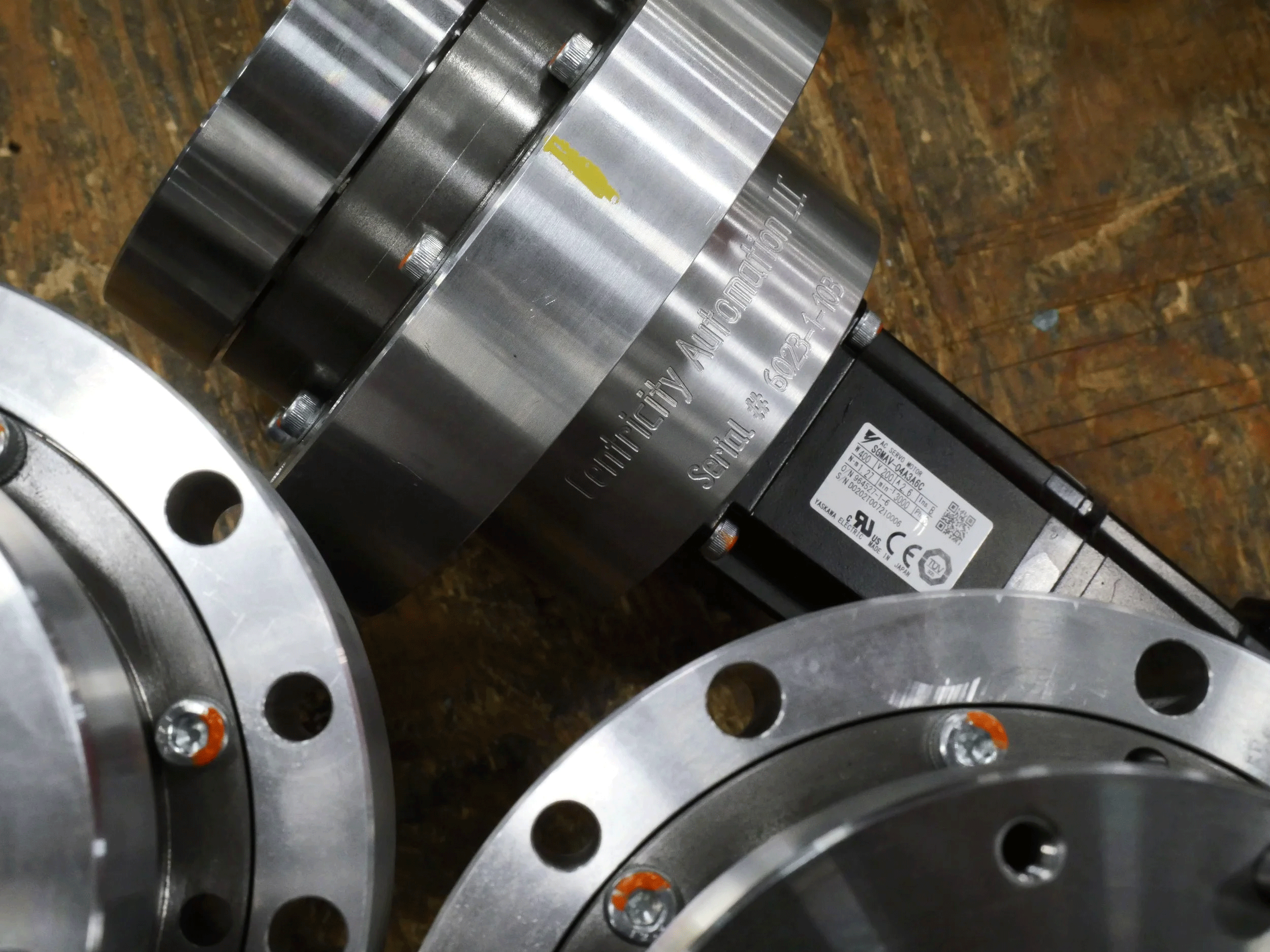
An automotive part assembly application uses Centricity precision servo indexers in four distinct roles: presenting components to automation, transferring assembled parts into a wash hood, driving a finishing conveyor, and positioning parts in a secondary processing machine. Three AR2000C units serve the primary assembly and finishing operations, while an AR2000D drives a three-station rotary table in the secondary machine.
Together, these applications show how the same type of motion component can support different machine functions. The useful starting point is the task: where must the part move, what must happen while it is there, and how will the mechanism connect to the rest of the process? Each installation answers those questions through a different combination of motion, tooling, and process access.
The Challenge: Move Parts Through Different Operations
The equipment must accommodate both operator loading and automated handling, then support washing, painting, oven transport, and further processing. Those operations call for different mechanisms. A loading table needs to exchange positions between people and automation. A wash table must present a part to an enclosed process. A conveyor must carry parts along a path. A rotary table must move workpieces between stations.
Application 1: A Reciprocating Part Load Table
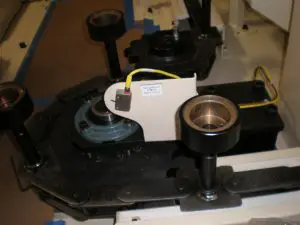
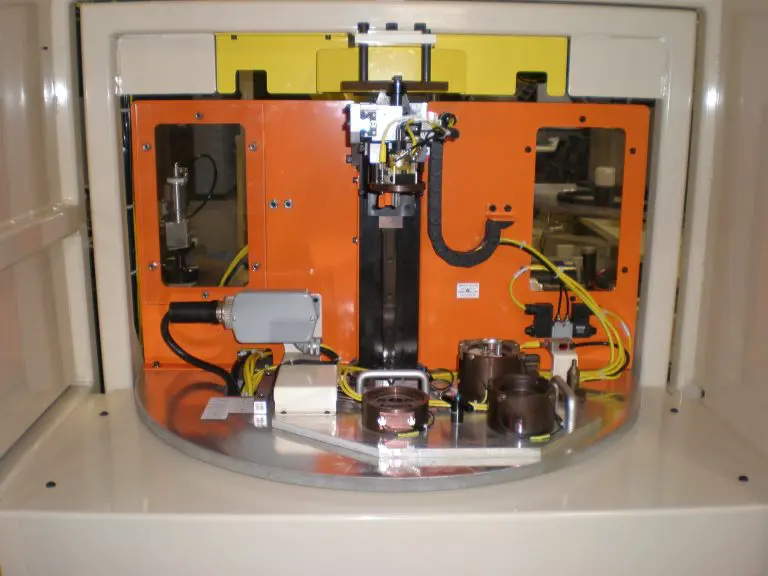
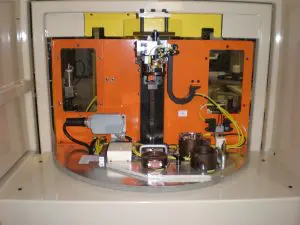
The first AR2000C rotates the part load table 180 degrees and then returns in the opposite direction. One side is accessible to the operator for loading components, while the other side is accessible to the automation and robot. The table exchanges these two working positions through a controlled half-turn.
Using Reversing Motion to Keep Services Connected
The reversing motion has a practical benefit beyond part presentation. Sensors and pneumatic components can be used on the table without slip rings or rotary couplings. Because the table turns back instead of accumulating rotation in one direction, its electrical and pneumatic connections can accommodate the limited travel.
For a machine builder considering a similar arrangement, the key is matching the motion to the service requirements. A table that only needs to exchange two positions may be well suited to a reversing move. Cable and hose routing still need to accommodate that motion, but the application demonstrates a way to avoid rotating service connections when continuous rotation is unnecessary.
Application 2: Moving an Assembled Part into a Wash Hood
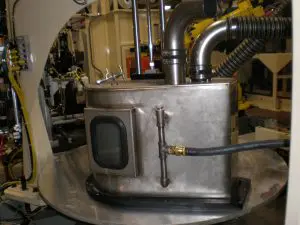
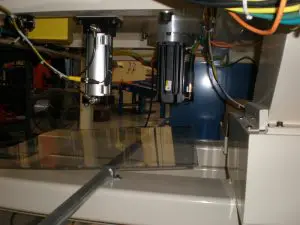
A second AR2000C serves the wash operation after assembly. The robot places the assembled part in a nest, and the indexer rotates it into the wash hood area. Here, the indexer functions as a transfer mechanism between a robot-accessible loading position and the cleaning process.
This use illustrates a different reason to choose rotary motion. The part remains in its nest as the table carries it into the process area. For another application, the same concept could be considered wherever a robot must hand a part off to a fixture that moves into a dedicated treatment zone. The fixture, enclosure, and motion sequence would be designed around that particular process.

Application 3: Driving a Chain-on-Edge Conveyor
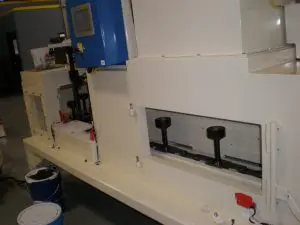
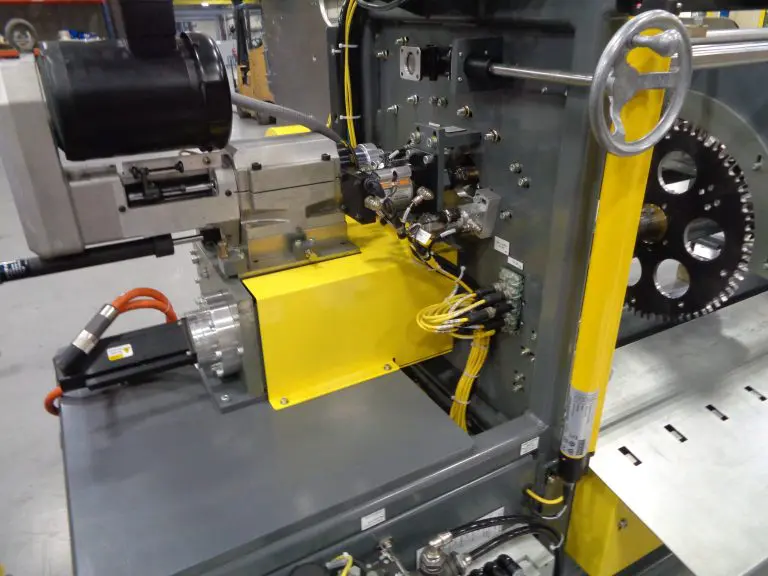
The third AR2000C drives a chain-on-edge conveyor that moves parts through ovens and a painting operation. Unlike the first two installations, the useful output is travel along a conveyor path. The indexer supplies rotary motion to the conveyor drive, and the chain carries the parts through the finishing equipment.
This is an important distinction for designers who associate an indexer only with a circular dial plate. Its application is not limited to placing tooling on a rotary table. Coupling the indexer to a conveyor drive allows rotary output to produce part movement along the route needed by the process.
The conveyor also connects separate operations. Painting and oven processing take place along its path, making the transport mechanism part of the finishing sequence. When evaluating this use on another machine, the conveyor load, required travel, process timing, and drive connection become the sizing inputs. The application demonstrates the arrangement without implying that every conveyor requires the same unit or motion profile.
Choosing the Mechanism Around the Task
Across the three AR2000C installations, the model is the same but the work it performs changes. Reversing rotation supports operator loading, a rotary transfer presents parts to washing, and a chain drive provides conveyor transport. The surrounding tooling and machine layout determine how each indexer turns its motion into a useful production function.
Application 4: A Three-Station Rotary Processing Table
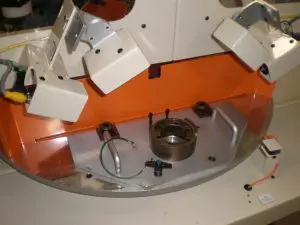
An AR2000D is installed in a secondary machine with a three-station rotary table. Parts enter this machine after the primary assembly processes for further processing. This is the familiar rotary indexing application: a table presents workpieces at successive stations around a circular layout.
The secondary machine completes the range of uses shown in the project. The indexers support part exchange, process transfer, conveyor transport, and station-to-station positioning. Each role has its own mechanical requirements, even though all use controlled rotary motion as their starting point.
The Result: Four Practical Uses Across an Assembly Process
This automotive application demonstrates the versatility of Centricity servo indexers through actual installations. Three AR2000C units handle distinct tasks in the primary equipment, and an AR2000D supports subsequent rotary processing. For machine builders, the takeaway is to consider the required part movement first, then select the indexer, tooling, and drive arrangement that fit that movement.
)