)
Choosing The Right Servo Index Drive Solution
When it comes to rotary indexing solutions, we offer three options: the EZ Series, the MS Series, and the AR…
Read More
Arnold Machine was engineering a chain-on-edge conveyor for an automated finishing application with demanding load, throughput, and motion-control requirements. The conveyor had to move a maximum chain weight of 2,135 pounds, including the steel chain, spindle assemblies, fixtures, and the heaviest production parts. It also had to index two parts every eight seconds while maintaining accurate, repeatable positioning through the process.
The conveyor used C2120 steel chain with custom top and lower links. A total of 308 spindle assemblies carried the parts. Each spindle incorporated high-temperature bearings, accepted slide-on steel part fixtures, and allowed the part to rotate fully inside the spray booth. This gave the finishing process the flexibility it needed, but it also increased the moving mass and resistance the drive system had to overcome.
The most difficult condition was startup. Arnold Machine calculated a theoretical starting breakaway torque of 2,414 ft-lbs. The drive therefore needed substantial torque at zero speed, sufficient safety margin, and precise control of a 12-inch index without introducing harsh acceleration or mechanical shock.
To size the conveyor drive, Arnold Machine modeled the system in Rockwell Automation Motion Analyzer. The load model used 2,135 pounds, a horizontal inclination, and a static coefficient of friction of 0.5 between steel and the PEEK chain-guide material. Using the conservative high end of the friction range helped account for the chain’s contact with slide surfaces throughout the conveyor.
The model also included the rotating components. Eleven idler sprockets had a 9.708-inch pitch-circle diameter, a mass moment of inertia of 165.57 lb-in² each, and calculated friction torque of 1,092 in-lbf. The driver sprocket had a 15.377-inch pitch-circle diameter, a mass moment of inertia of 1,167.42 lb-in², and calculated friction torque of 1,730 in-lbf.
Motion Analyzer represented the Centricity unit as a 105:1 transmission operating at nearly 100% efficiency. This provided a realistic system-level view of acceleration, velocity, force, power, inertia, and torque before finalizing the servo motor and motion profile.
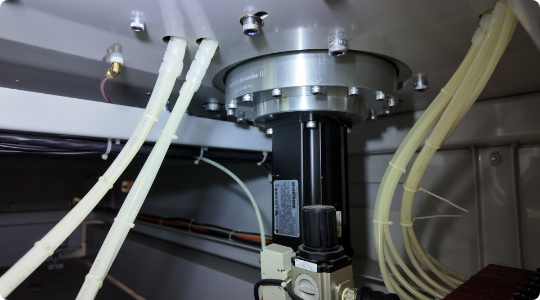
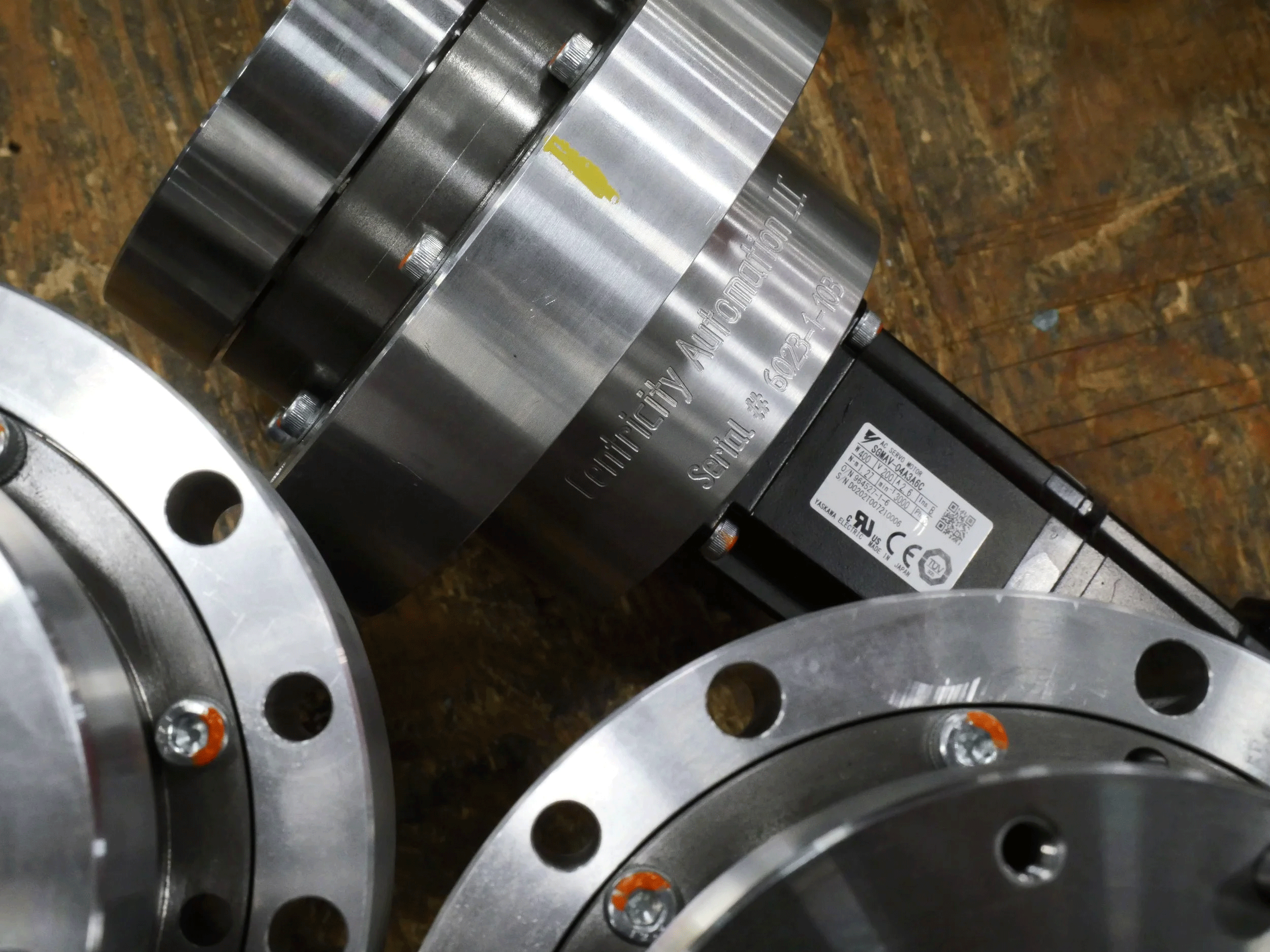
Arnold Machine selected a Centricity AR2000G servo index unit and paired it with an Allen-Bradley VPL-B1654D-PJ12AA servo motor. The AR Series is designed for machine builders that have a specified or preferred servo motor platform. That allowed Arnold Machine to retain the customer’s Rockwell Automation controls architecture while using the Centricity indexer to multiply torque and drive the conveyor directly.
The selected motor is rated for 3,000 rpm, while the application requires a maximum of approximately 1,350 rpm. Its continuous stall torque is 24.33 ft-lbs, which translates to approximately 2,500 ft-lbs through the Centricity unit. Peak stall torque is 58.5 ft-lbs, producing approximately 6,142.5 ft-lbs at the output. Compared with the 2,414 ft-lbs theoretical breakaway requirement, the peak output provides a safety factor greater than 2 at zero speed.
That reserve is important because a conveyor drive must do more than achieve average running torque. It must reliably start a fully loaded system, overcome static friction, manage load variation, and preserve performance as operating conditions change.
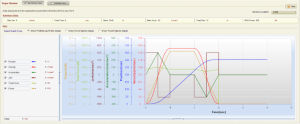
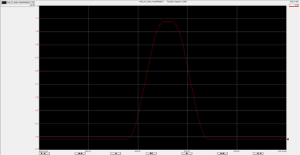
Torque capacity alone would not satisfy the application. The system also needed to advance exactly 12 inches per index, move two parts each cycle, and complete the overall machine cycle in eight seconds. An aggressive theoretical profile established the performance boundary, but the final motion profile used smoother acceleration and deceleration to reduce mechanical stress while still meeting production timing.
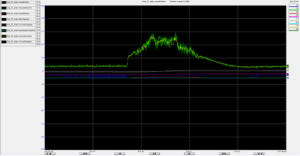
The AR2000G’s direct-coupled design gave the controls team fine authority over the motion profile. That made it possible to tune the servo for harmonic suppression and compensation without the compliance, backlash, or maintenance considerations associated with more complex drive arrangements. The realized profile delivered controlled acceleration, stable travel, and smooth deceleration into position.
The conveyor’s indexing rate was tied directly to the finishing process. Parts required at least 15 minutes of cure time, and two parts entered the oven every eight seconds. At that production rate, the oven needed space for 112.5 index positions, or 225 parts, within the cure window.
The Centricity-driven conveyor allows the system design to maintain this required part flow while preserving the full cure duration. The drive solution connects motion performance to the broader process objective: consistent throughput without compromising finishing quality.
The Centricity AR2000G gave Arnold Machine a compact, direct-coupled way to drive a heavy chain-on-edge conveyor using the specified Allen-Bradley servo platform. The engineered solution provides the calculated breakaway capacity, more than 2:1 peak torque margin, precise 12-inch indexing, and the motion-tuning capability required for an eight-second cycle.
For machine builders, the application demonstrates the value of sizing a servo indexing system as a complete mechanical and controls package. By combining conservative load modeling, a customer-preferred servo motor, high-ratio torque multiplication, and a tunable motion profile, Arnold Machine and Centricity created a practical approach for demanding conveyor automation.
Please provide as much information as possible to ensure an accurate quote or product recommendation. Your information will not be sold or shared.
Find the right indexer